Product Walkthrough

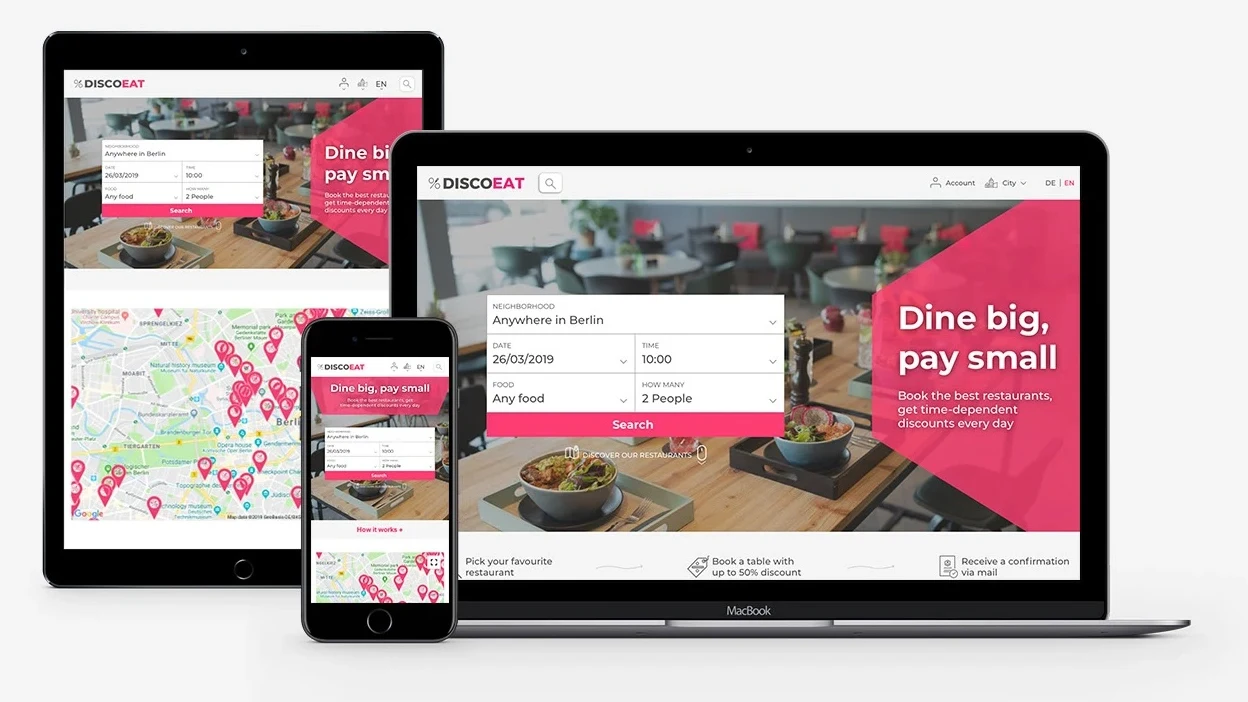
Homepage and search entry

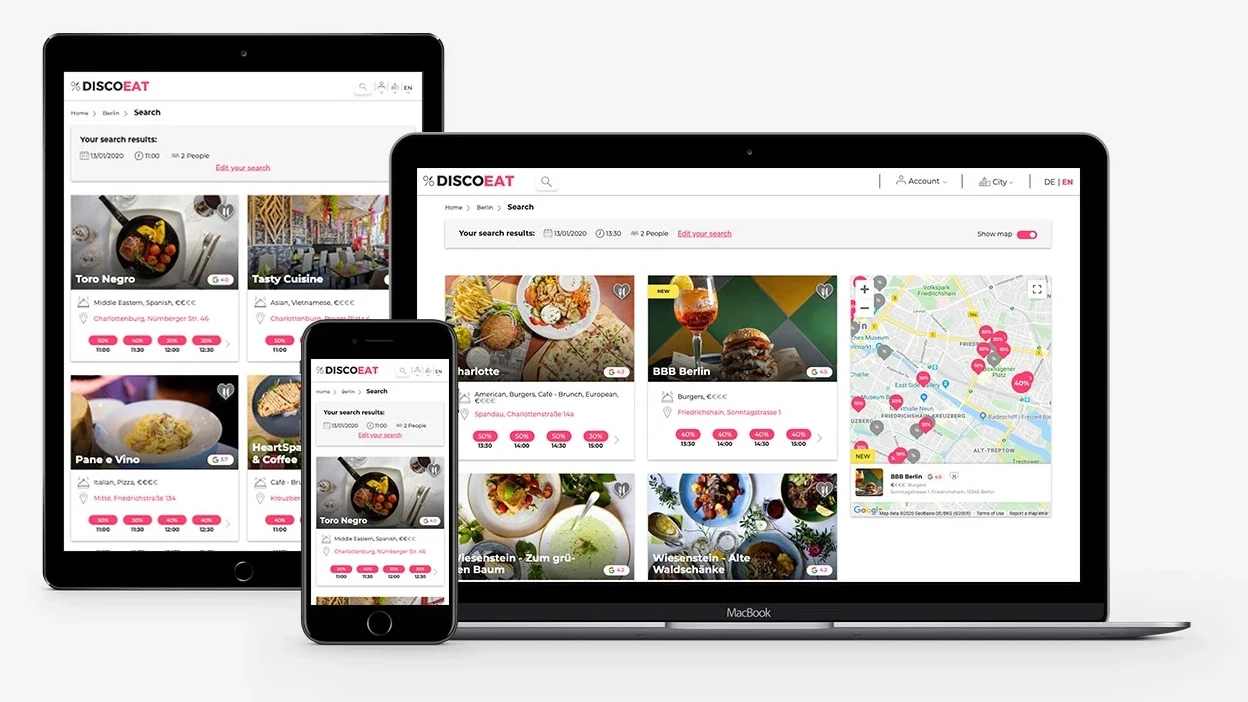
Search results and map comparison
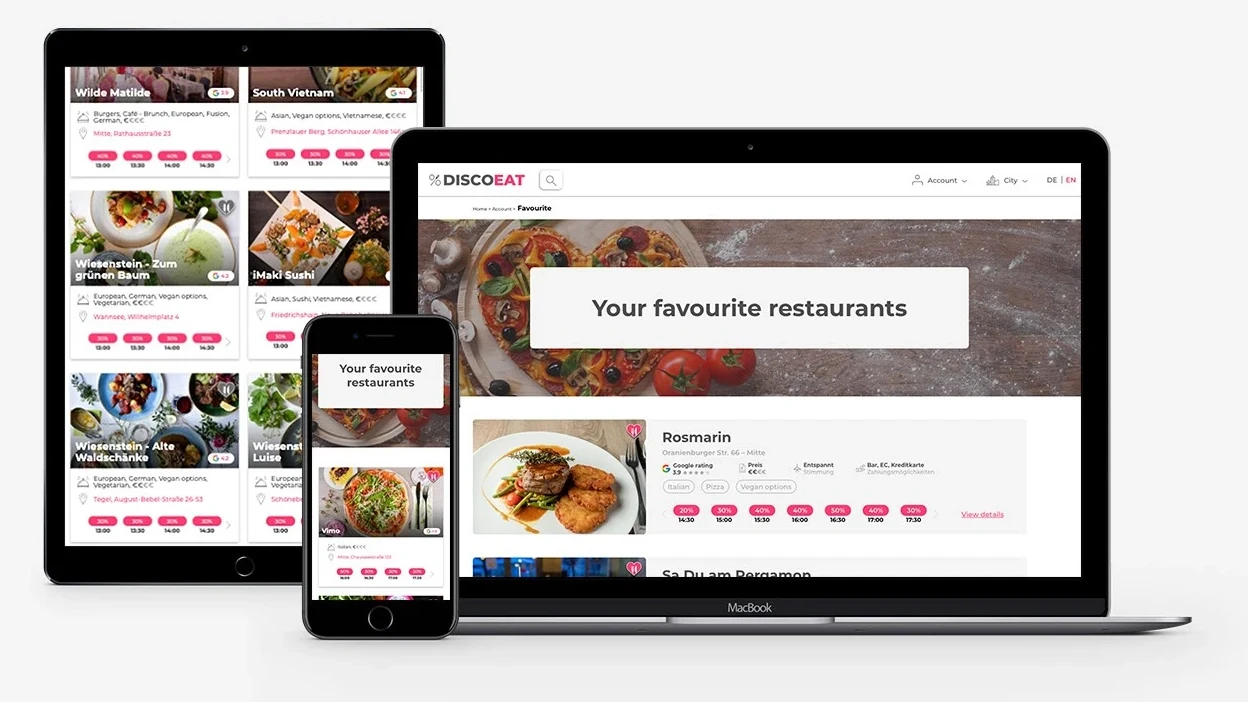
Saved restaurants and offer comparison
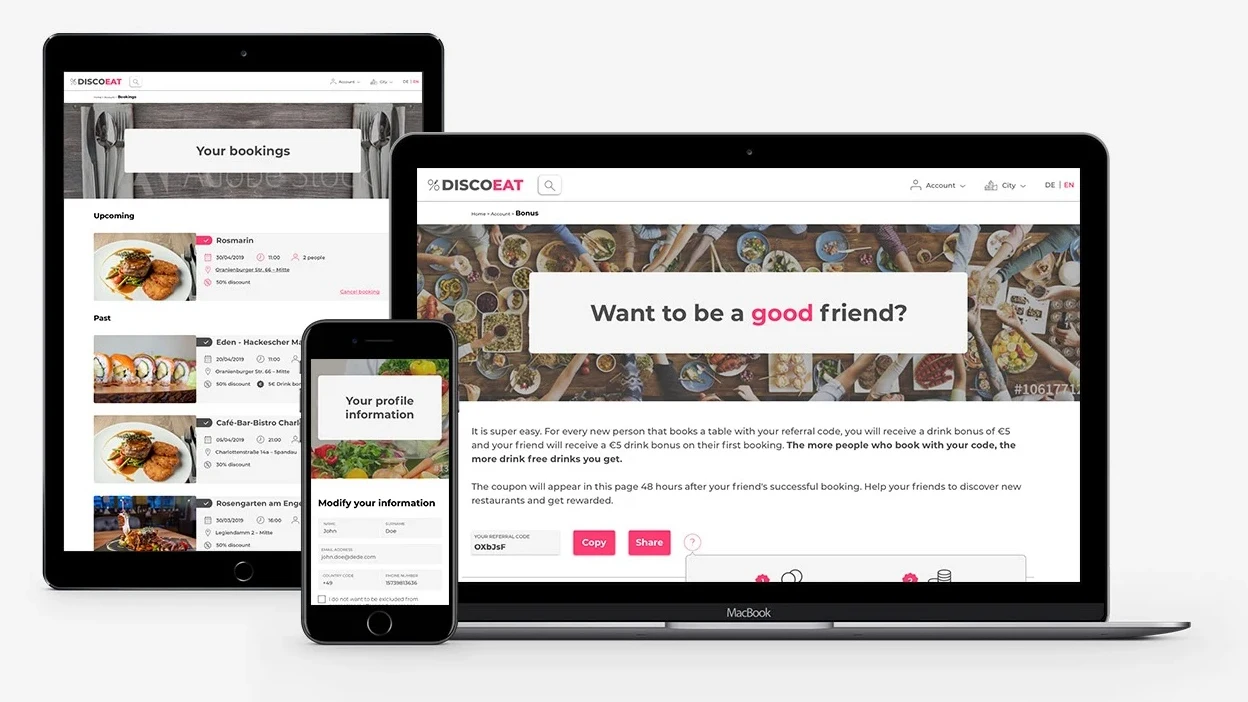
Booking, profile, and bonus touchpoints
Overview
Berlin-based restaurant discovery and booking platform helping users discover restaurants, compare discounted dining offers, and move from browsing to booking with less friction. Dynamic pricing connected customer demand with restaurant occupancy, while a broader restaurant ecosystem supported the experience in the background.
Problem
The product needed to turn dynamic pricing, restaurant discovery, and booking into a simple customer-facing mobile experience without obscuring the platform logic behind it.
- Users needed a faster way to discover restaurants, compare offers, and understand available discounts.
- Restaurants needed to fill capacity more efficiently through dynamic pricing and clearer booking flows.
- The experience had to connect discovery, offer clarity, and booking intent without overwhelming the mobile interface.
Solution
The work shaped DiscoEat as a user-facing discovery and booking experience where restaurant cards, filters, and offer details made discounted dining easier to understand before booking, while the broader platform ecosystem stayed supportive rather than dominant.
- Designed a customer-facing discovery experience for browsing restaurants, offers, and dining options.
- Structured restaurant cards, filters, and offer details to make discounts easier to understand before booking.
- Connected booking-related flows with the broader restaurant ecosystem while keeping the user journey clear.
Key Decisions
Make discovery offer-led
The browsing experience helped users compare restaurants through cuisine, location, availability, and discount value.
Clarify discount logic
Offer information was surfaced earlier so users could understand value before moving into booking details.
Connect booking to platform logic
Booking actions were designed to support both customer decisions and restaurant capacity needs through dynamic pricing.
Role
- Led UX/UI work across customer-facing restaurant discovery, booking, and dining touchpoints at Nimo GmbH.
- Structured restaurant cards, offer presentation, and filters around faster mobile comparison and clearer decisions.
- Connected booking-related flows to the wider platform ecosystem without weakening the user journey.
- Balanced customer clarity, business logic, and implementation constraints across app and web surfaces.
Process
Journey Framing
The work started by mapping how discovery, discount evaluation, and booking intent fit together across the broader dining journey.
Decision Mapping
Key customer decisions were mapped around where to eat, how much value an offer provided, whether availability felt clear enough, and what action should come next.
Pattern Review
Competitor patterns and existing product behavior were reviewed to identify where search, offer hierarchy, and restaurant cards needed stronger clarity.
Flow & State Design
Discovery flows, filtering states, offer details, and booking-related touchpoints were redesigned to reduce hesitation and improve action clarity.
System Alignment
Components, selectors, and UI rules were aligned so the user-facing experience stayed consistent while still fitting the wider restaurant platform and connected systems.
UX Focus
Restaurant discovery and browsing
Browsing patterns were shaped to help users move from exploration to shortlisting with less friction.
Discount visibility and offer comparison
Offer hierarchy was designed to make discounts easier to compare before users committed to deeper booking steps.
Booking-related decision flows
Booking actions and supporting states were structured so next steps felt clearer inside the dining journey.
Mobile dining experience consistency
Buttons, icons, cards, and repeated mobile patterns were aligned to keep discovery and booking behavior consistent.
Architecture
DiscoEat was designed primarily as a user-facing discovery and booking platform. Behind that layer sat a broader Shopify-like ecosystem for restaurants, supporting occupancy logic, booking tools, and adjacent dining systems without becoming the main UX story of this case study.
Discovery Layer
Browse, search, and comparison patterns structured around faster restaurant discovery
Offer & Pricing Layer
Discounts, availability, and dynamic-pricing signals surfaced earlier so value felt easier to understand
Booking Journey Layer
Booking-related actions shaped to support customer decisions while reflecting restaurant capacity logic
UI System Layer
Buttons, icons, filters, restaurant cards, and mobile patterns aligned into one consistent dining experience
Restaurant Ecosystem Context
Booking widgets, order management, and adjacent systems such as DIDIT supported the wider platform without overtaking the discovery and booking narrative
Challenges & Trade-offs
Balancing customer clarity with business logic
Dynamic pricing and restaurant occupancy logic had to be translated into a simple customer-facing experience. The interface kept discount value visible while reducing the amount of business complexity users had to parse directly.
Connecting multiple dining touchpoints
Discovery, booking, ordering, and adjacent systems such as DIDIT needed to feel connected without fragmenting the user journey. This case study stays focused on discovery, offers, and booking while treating those other touchpoints as supporting context.
Outcomes
The work helped create a clearer customer-facing product experience for restaurant discovery, discounted dining, and booking decisions. It also strengthened the connection between dynamic-pricing logic, visual hierarchy, and implementation-ready UI patterns.
Outcomes
- Discovery became easier to scan because restaurant cards, filters, and offer cues were treated as one decision system.
- Discount communication moved closer to the point where users were evaluating where to eat, reducing interpretation work.
- The redesign translated product and platform logic into interface rules that could stay consistent across touchpoints.
Key Learnings
- Discovery products work best when users can evaluate value before being asked to commit.
- Dynamic pricing only feels useful when the customer-facing logic remains easy to scan and trust.
- Consistency across dining touchpoints matters most when discovery, booking, and adjacent actions happen in quick succession.
Tech Stack
Design
Customer UX Focus
Platform Context