UX/UI first
POSITIONING · HIERARCHY
Structure the experience around design work first, with technical depth as supporting evidence.
Portfolio system built on content architecture and reusable UI
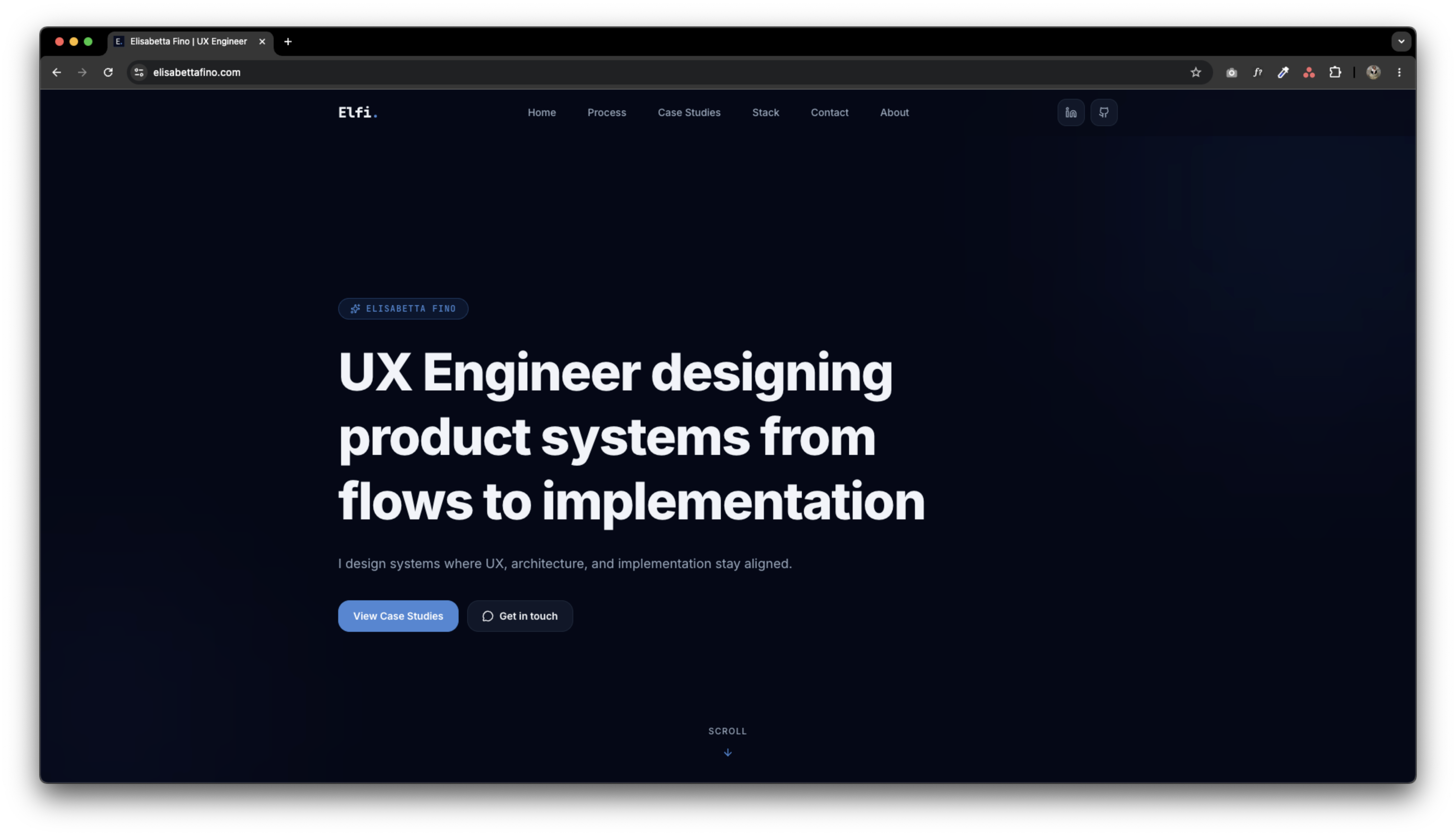
Homepage positioning
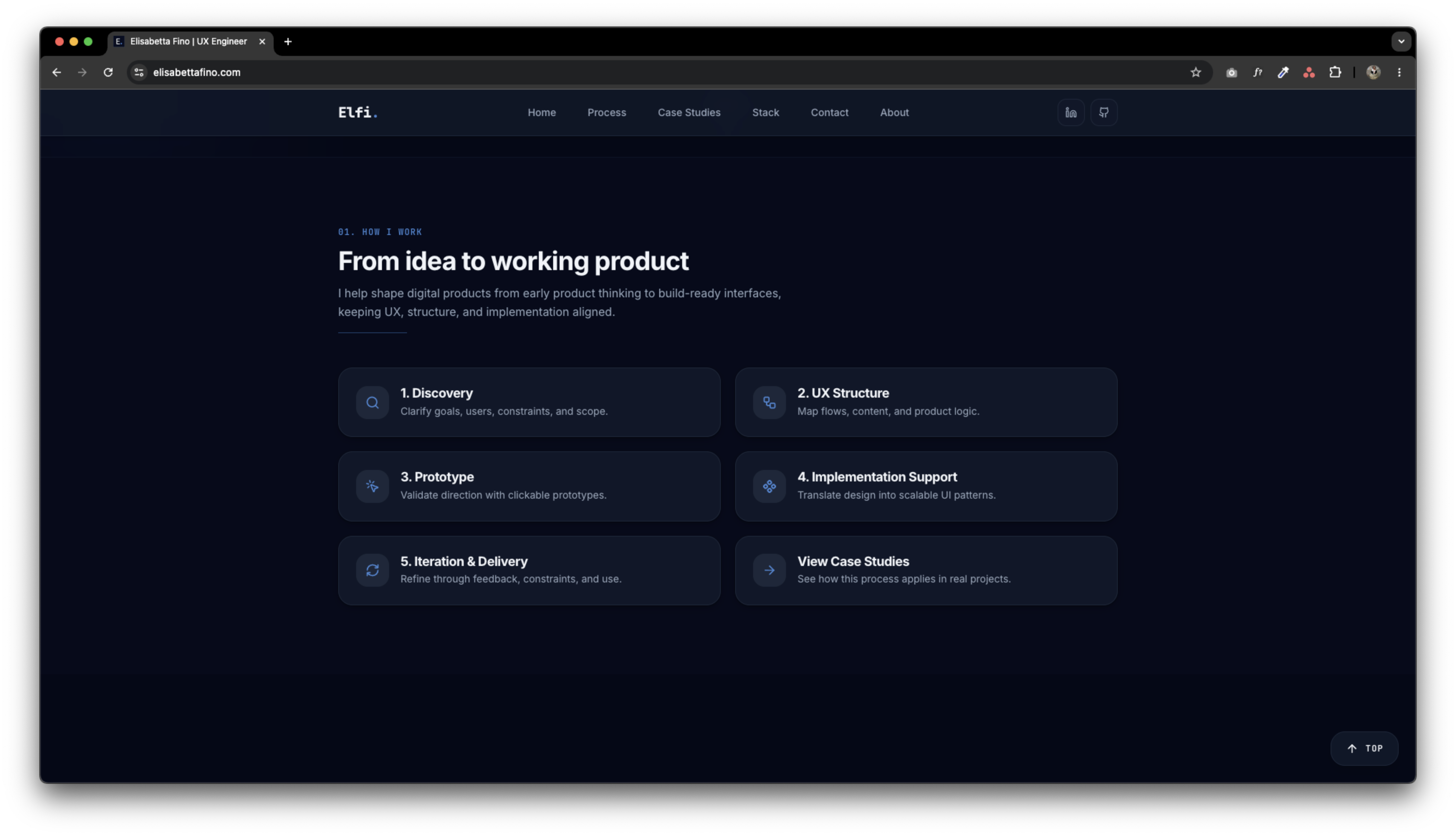
Process communication
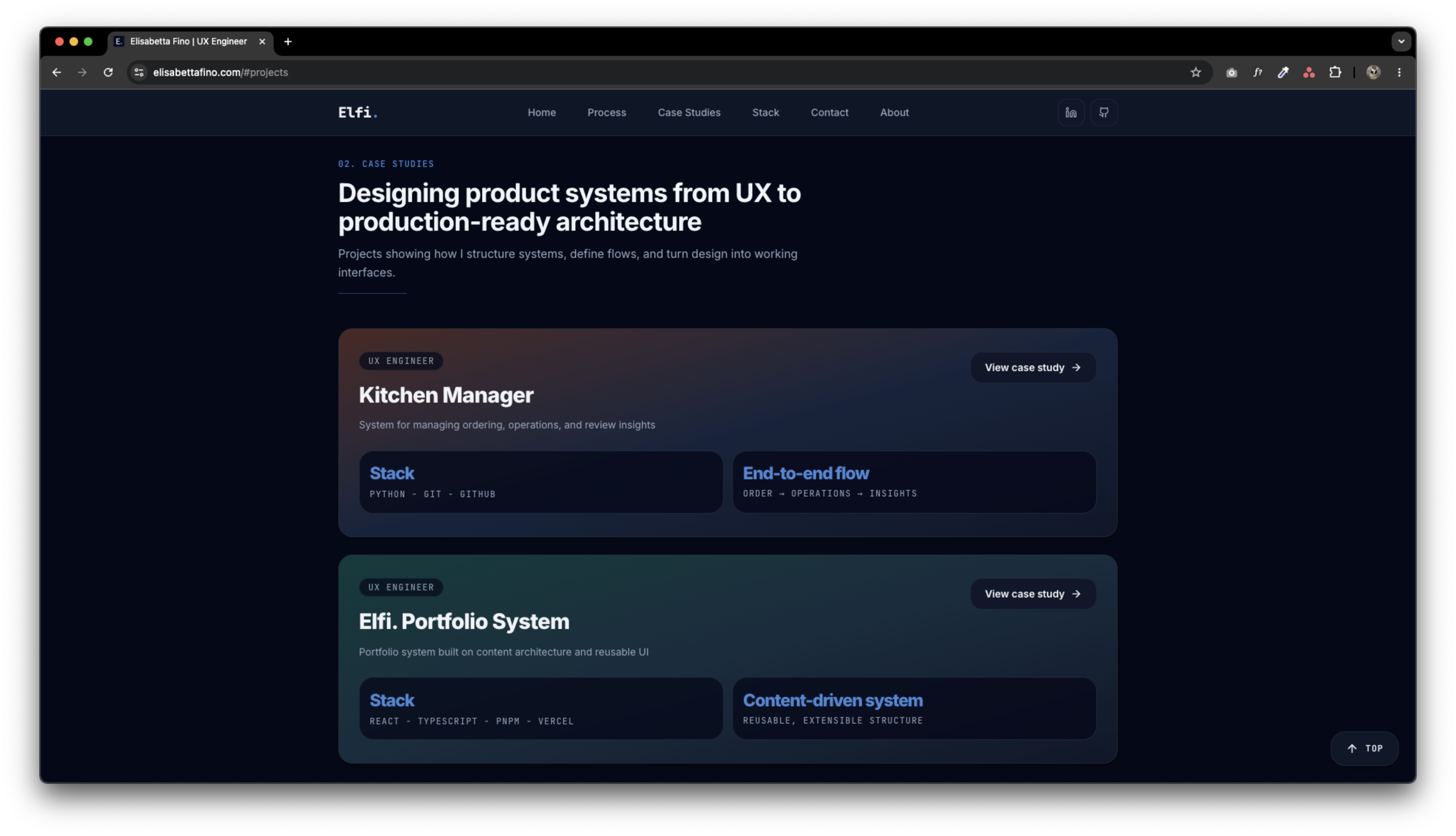
Public case-study system
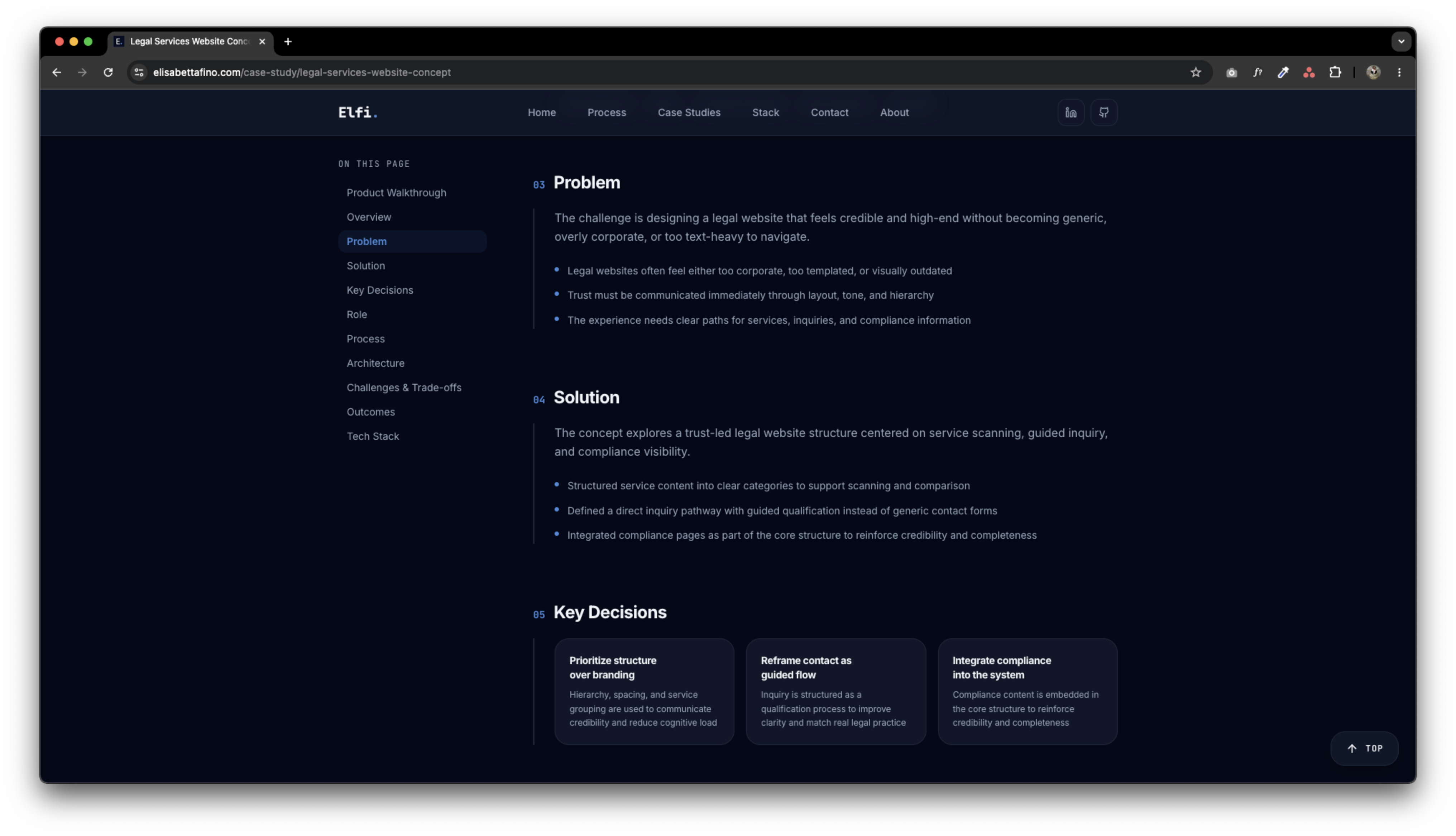
Reusable case-study structure
Interactive gallery layer
Scalable content system built on a unified architecture and reusable UI primitives. A shared content model drives pages, navigation, and component rendering.
Most portfolio sites showcase visual quality but fail to demonstrate system thinking, maintainability, and implementation discipline.
Elfi is an independent end-to-end project covering:
The portfolio combines recruiter-focused content hierarchy, reusable case-study patterns, and a frontend system that supports ongoing content, positioning, and structural updates.
POSITIONING · HIERARCHY
Structure the experience around design work first, with technical depth as supporting evidence.
SCANNING · DETAIL
Combine scannable project summaries with detailed case studies for different recruiter reading behaviours.
SYSTEM · CONSISTENCY
Use shared content structures and interface patterns so projects evolve consistently without rebuilding each page.
Clarify target roles, recruiter needs, and how UX/UI leads while UX Engineering supports the profile.
Organise projects, experience, and case studies into a clear content hierarchy.
Create reusable page patterns, responsive components, and a consistent visual language.
Build in React and TypeScript, then refine content, layouts, and positioning over time.
The portfolio connects recruiter journeys, structured content, reusable interface patterns, and frontend delivery within one evolving system.
Recruiter journey
Homepage, selected work, case studies, About, CV, and contact actions.
Content system
Project data, reusable sections, experience, and evidence.
Interface system
Responsive layouts, shared components, visual rules, and interaction patterns.
Delivery layer
Routing, SEO, accessibility, analytics, and live frontend delivery.
Balancing clarity and range
The portfolio needs to show design depth and technical capability without weakening the primary UX/UI positioning.
Evolving without fragmentation
Content and positioning change over time, so the system needs to support updates without losing visual or structural consistency.
Clear professional positioning
Creates a hierarchy that presents UX/UI expertise first while keeping technical depth visible.
Consistent case studies
Establishes reusable patterns for presenting projects through a shared narrative and visual language.
Reusable portfolio foundation
Supports content updates, new projects, and positioning changes within one consistent system.
Define positioning
Structure content
Design the system
Build and refine