Separate user roles
ROLES · JOURNEYS
Created focused customer and admin experiences with clearly separated responsibilities.
System for managing ordering, operations, and review insights
Short product walkthrough
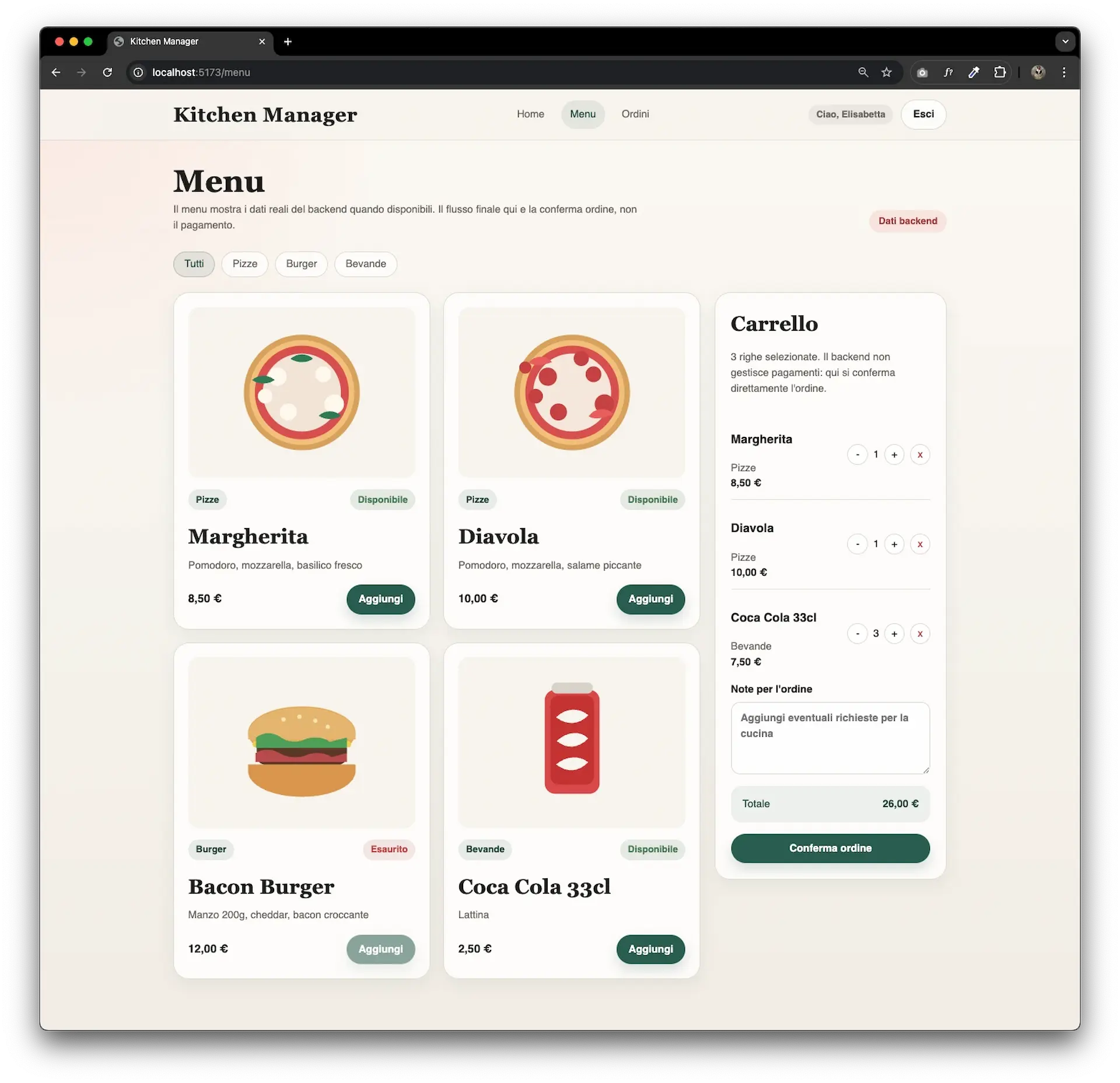
Public menu and dish filtering
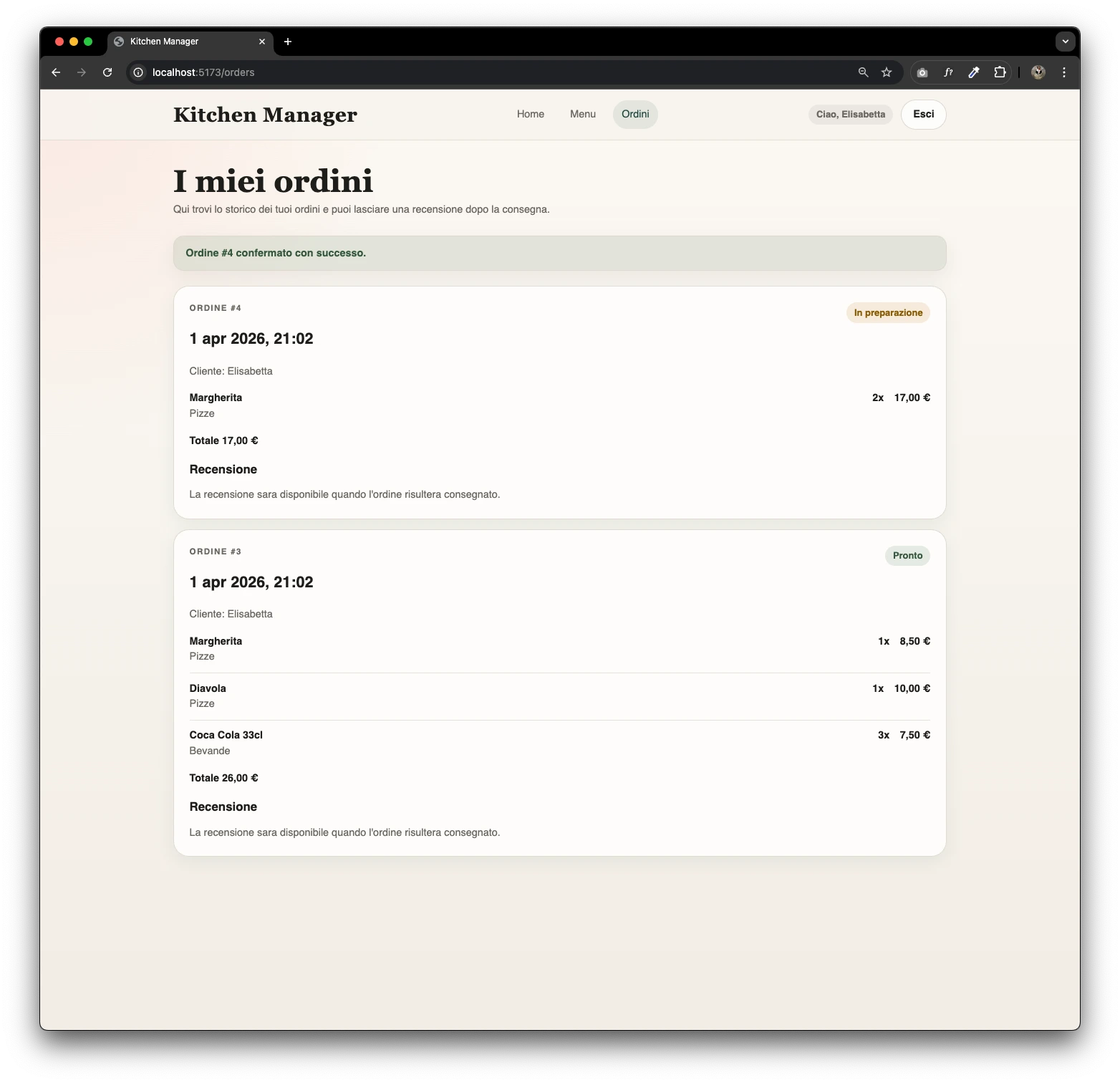
Customer order history
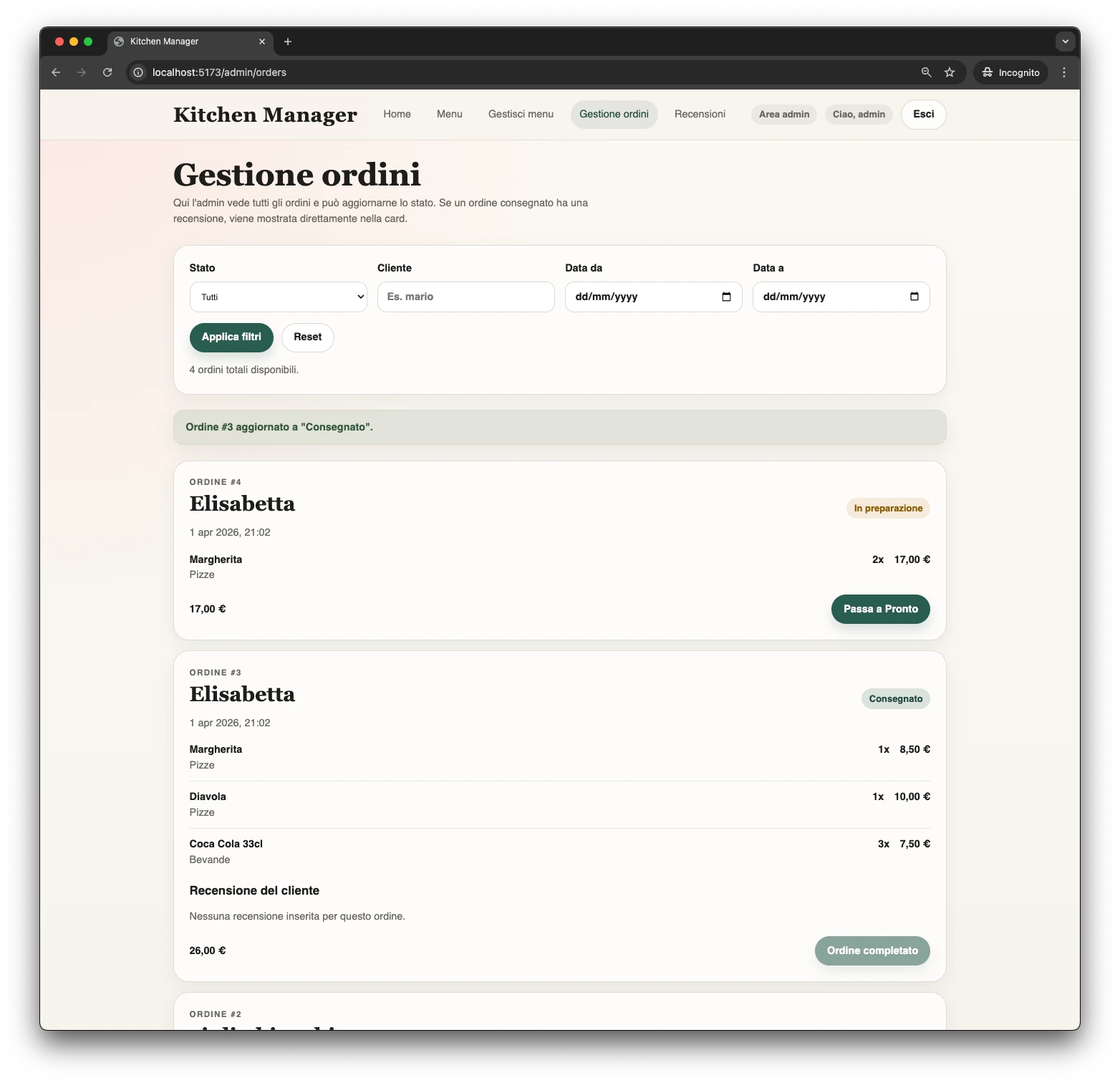
Admin order management
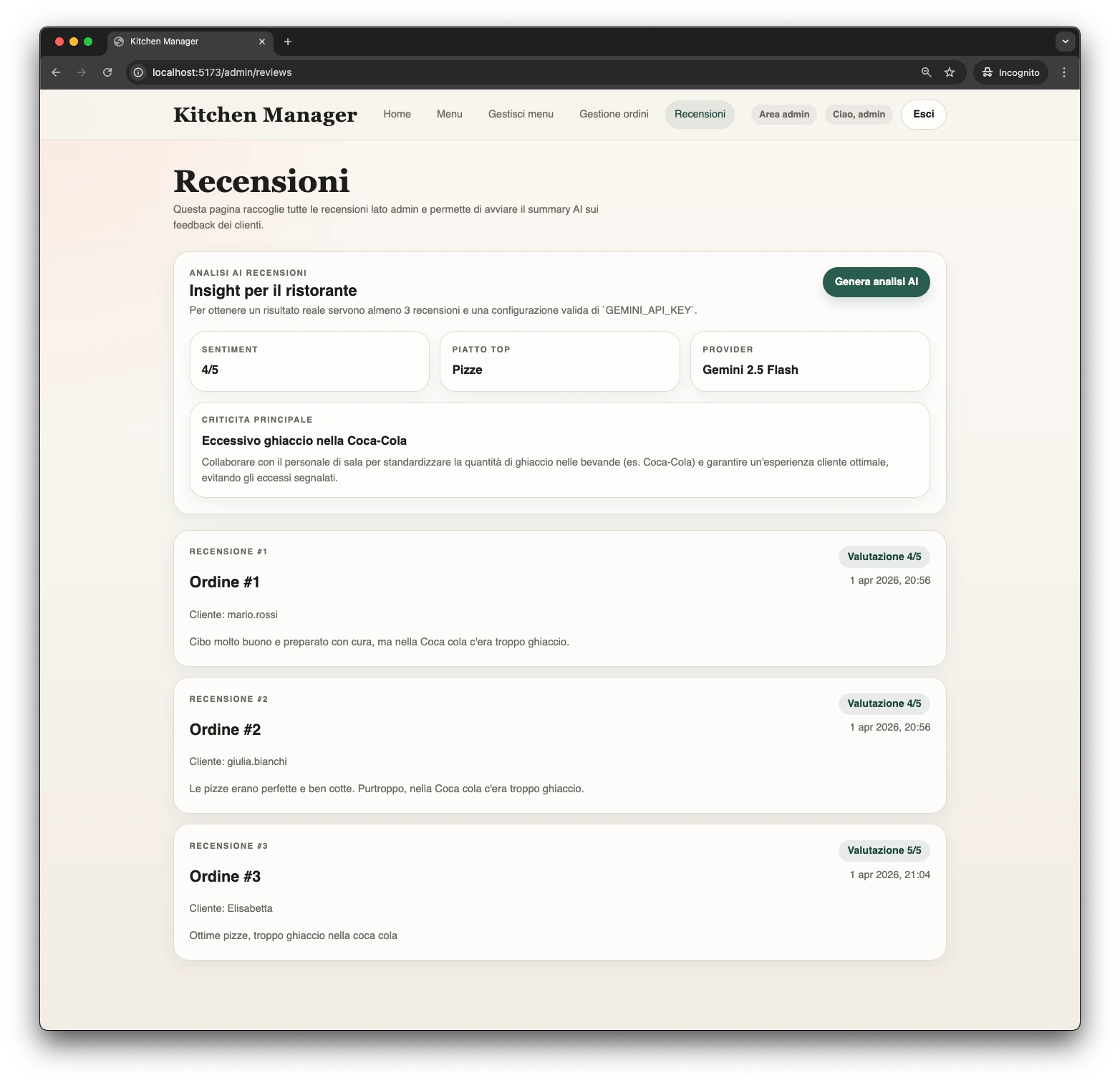
AI review summary
Full-stack system connecting ordering, operations, and post-delivery insights into a single, structured operational flow. Designed to coordinate customer, admin, and AI-driven processes within a single operational lifecycle.
The ordering and operations flow was fragmented across spreadsheets, chat, and disconnected tools, making it difficult to track orders reliably and increasing duplication and error risk.
Kitchen Manager was developed as a five-person final project during the Dev, Cloud & Product Academy. Within the team, my contribution focused on:
The solution connected customer ordering, admin operations, explicit order states, and AI-supported review insights within one role-based product.
ROLES · JOURNEYS
Created focused customer and admin experiences with clearly separated responsibilities.
STATES · FEEDBACK
Used predictable states for clearer tracking, management, and expectations.
AI · INSIGHTS
Used AI for review summaries without interrupting the core ordering journey.
Translated the academy brief into customer, admin, and post-delivery priorities.
Structured journeys, permissions, and order-state transitions.
Developed menu, cart, order history, admin management, and review experiences.
Refined responsive UI while aligning React implementation with API rules and team delivery.
Understanding the system structure helped align customer and admin experiences with roles, states, and API constraints.
Customer flow
Menu discovery, filters, cart, order history, and reviews.
Admin operations
Menu management, orders, and status updates.
Roles and states
Authentication, permissions, and order states.
Review insights
Feedback and AI-supported summaries.
This proposed production architecture shows how frontend delivery, backend services, and data storage could be distributed across AWS components.
Compute & Load Distribution
ECS Fargate behind an Application Load Balancer
Database
RDS PostgreSQL as the production database
Security
WAF, IAM, Secrets Manager, and private networking
Networking
Private backend subnets with controlled outbound access
Storage & Monitoring
S3 for assets and CloudWatch for logs and visibility
Balancing scope and delivery
The team prioritised a complete ordering journey while balancing scope, shared responsibilities, and the academy timeframe.
Connecting roles and states
Customer and admin interfaces shared system logic while keeping operational complexity out of the user experience.
Clearer role separation
Made customer actions and admin responsibilities easier to understand across the same product.
Predictable order lifecycle
Aligned tracking and order management around one shared set of status transitions.
Scoped AI support
Placed AI in the review workflow as a post-delivery admin aid rather than a core ordering dependency.
Frame the MVP
Define roles and states
Design and build key flows
Align interface and implementation