Visual identity first
IDENTITY · NAVIGATION
Use large imagery and editorial typography to express the band’s character while keeping navigation direct and readable.
A visual-first band website MVP balancing identity, content, and practical navigation.
Short walkthrough of the homepage, about flow, events, and future member layer
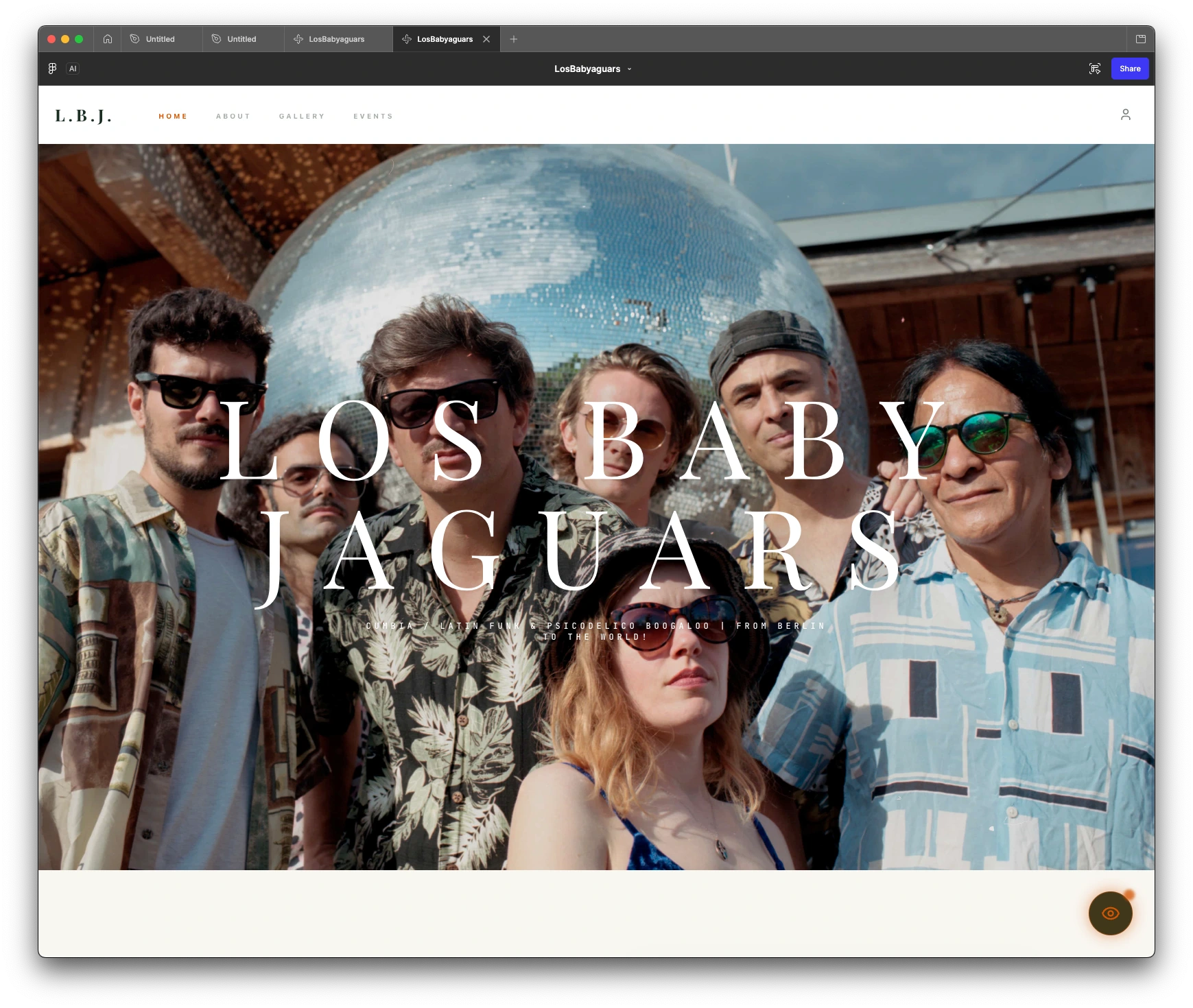
Cinematic homepage hero and identity direction
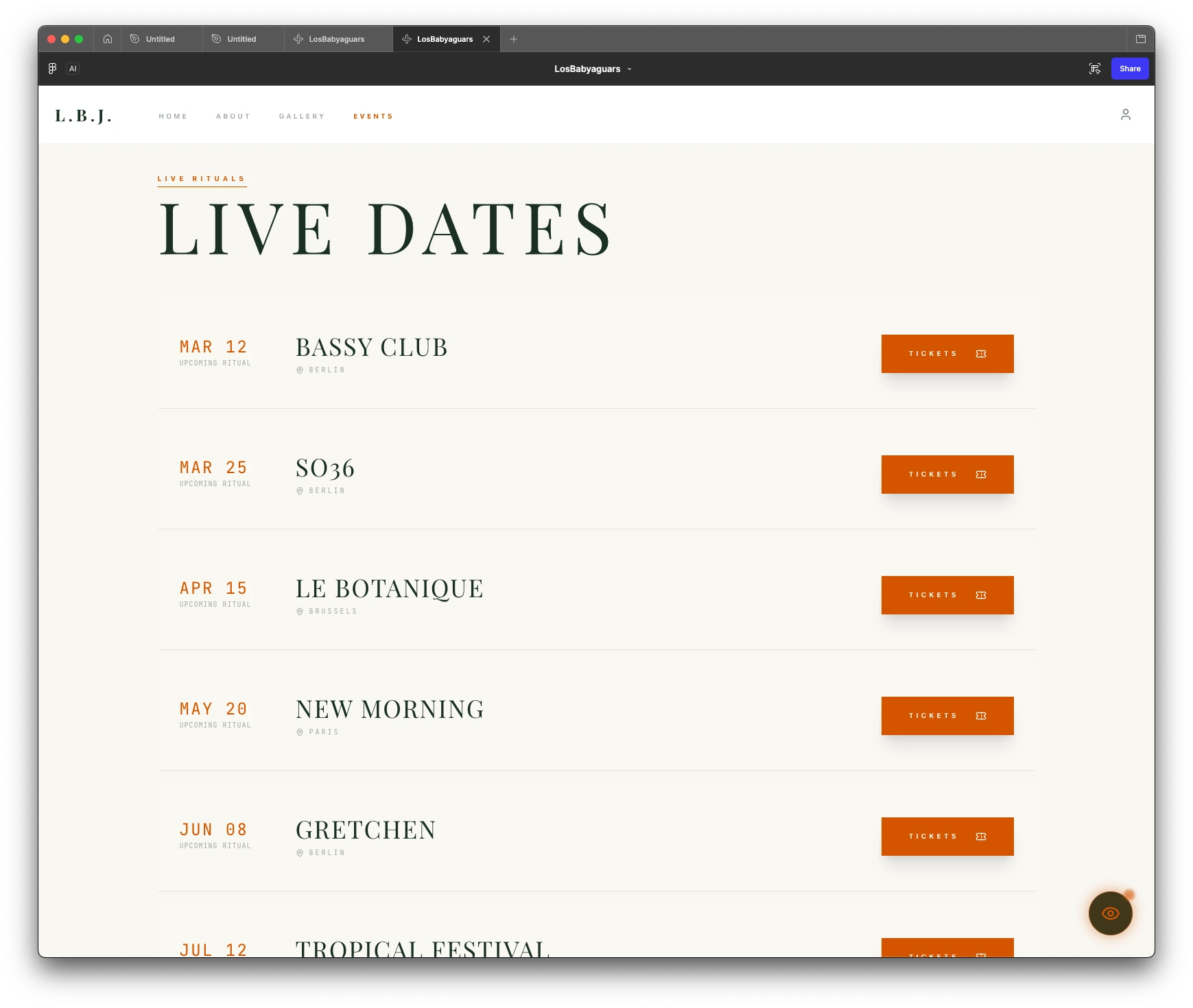
Event-ready structure for live dates and practical navigation
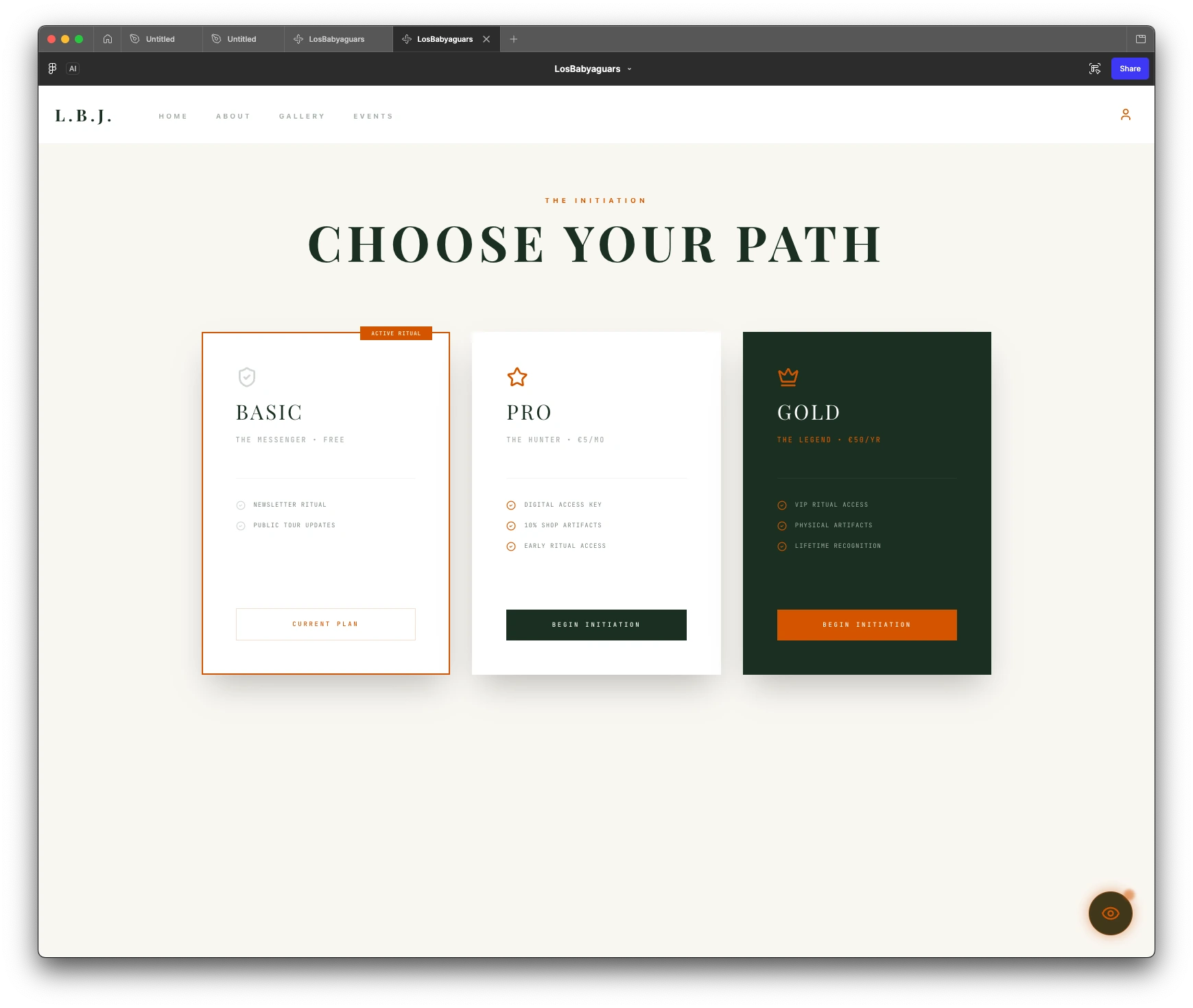
Future member layer explored as a secondary system concept
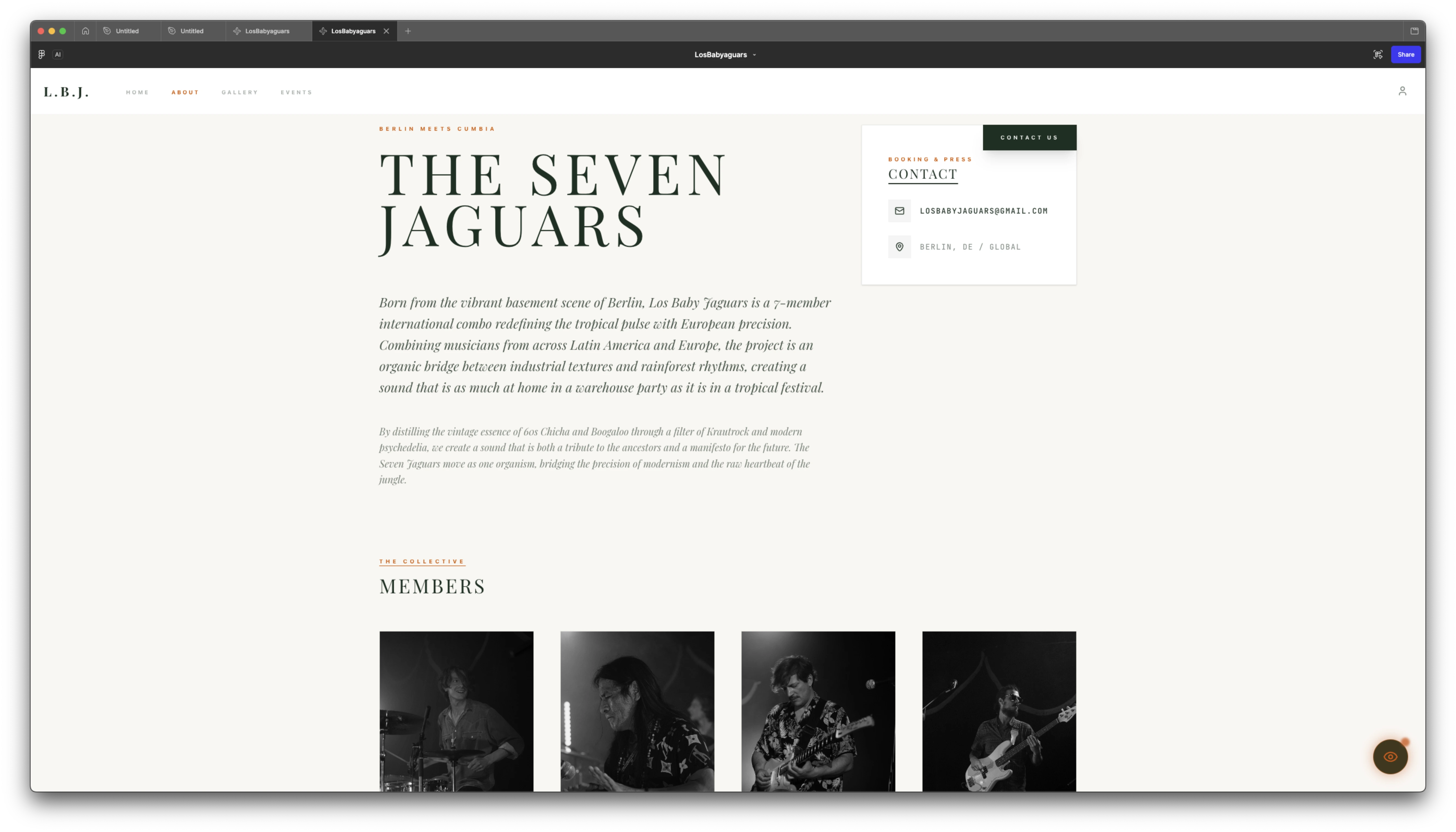
About page combining band identity, editorial layout, and member overview
Los Baby Jaguars is a personal MVP created for a real band. The experience combines a strong visual identity with clear navigation across the band story, members, events, and evolving content.
Create a distinctive band website that feels expressive and immersive while keeping essential content easy to find and navigate.
I independently shaped the product direction, UX/UI, visual system, and functional MVP.
IDENTITY · NAVIGATION
Use large imagery and editorial typography to express the band’s character while keeping navigation direct and readable.
MVP · CONTENT
Prioritise the band story, members, and events as the core MVP experience before adding secondary functionality.
FUTURE · SCOPE
Keep membership and payments outside the main flow until they become validated needs.
Shape the product idea, core content, and first navigation priorities around the band’s current needs.
Translate the band’s identity into imagery, typography, composition, and responsive layouts.
Organise the band story, members, and events into clear pages and browsing paths.
Build the working MVP through vibe coding and refine the experience as the project evolves.
The MVP organises identity, core band content, and future scope into a simple experience structure.
Identity
Imagery, typography, and composition establish the band’s visual character.
Core content
Band story, members, events, and gallery form the main browsing experience.
Future scope
Membership and payment concepts remain outside the current MVP flow.
Expressive identity, clear navigation
The visual direction needs to feel distinctive without making essential content harder to find.
Working MVP, evolving scope
Real band content is still evolving, while membership and payment concepts remain outside the current release.
Distinct visual direction
Creates an editorial, image-led experience that reflects the band’s character.
Clear content hierarchy
Organises the band story, members, events, and gallery into direct browsing paths.
Working MVP foundation
Provides a functional base for real content updates and future scope decisions.
Define the MVP
Build the visual direction
Build and refine